Proudly serving Phoenix, Mesa, Scottsdale, Chandler, Glendale, Peoria & surrounding areasCall or Text 24/7: 480-210-2595
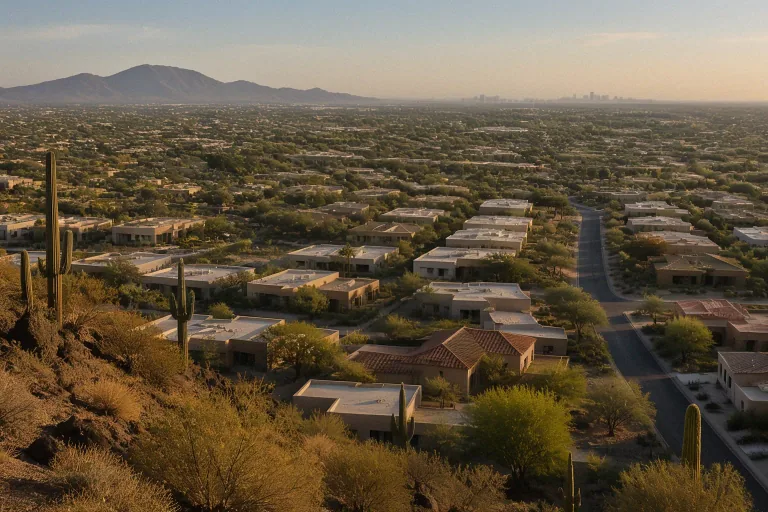
Aerial view of a residential neighborhood in Phoenix, AZ, featuring desert architecture and saguaro cacti.

Air Duct Inspection Services in Phoenix, AZ

Phoenix Duct Cleaners provides air duct inspection services for residential and commercial HVAC systems in Phoenix, Arizona. Our team inspects, cleans, seals, and repairs ductwork, with services that include residential air duct cleaning, commercial air duct cleaning, HVAC duct cleaning, and duct leak detection. We also handle vent cleaning, dryer vent cleaning, duct sanitizing and deodorizing, Aeroseal duct sealing, and targeted air duct repair when findings support the work.

Air conditioning runs nine or more months of the year across the Salt River Valley, continually pulling fine desert dust, haboob sediment, pollen, and pet dander through ductwork. Monsoon humidity and 115-degree summer days add moisture and thermal stress that can expose leaks, damaged insulation, and contamination. Our technicians use borescope cameras, thermal imaging, and static pressure gauges while following NADCA ACR standards and licensing recognized by the Arizona Registrar of Contractors.

Phoenix attic spaces can reach 140 to 160 degrees on summer afternoons, accelerating mastic cracks, insulation breakdown, and seam separation. An opening as small as a quarter inch can pull attic dust and insulation fibers into supply air, so a documented inspection can reveal trouble before cleaning, sealing, or repair is recommended.

Phoenix Duct Cleaners provides air duct cleaning throughout Phoenix, Scottsdale, Mesa, Tempe, Glendale, Peoria, and Surprise.

★ ★ ★ ★ ★5/5 Customer Rating · 15 Years of Service Experience · Hundreds of Duct Systems Cleaned · Licensed, Bonded & Insured · Homes & Commercial Properties Served
Phoenix Air Duct Inspection Benefits

What Is an Air Duct Inspection?

An air duct inspection is a structured evaluation of supply and return registers, accessible duct runs, HVAC units, and interior duct surfaces. We combine a property walkthrough with borescope camera footage and static pressure testing to look for buildup, blockages, leaks, crushed sections, or disconnected runs.

Because duct performance depends on the connected HVAC equipment, the visit also includes the air handler cabinet, coil condition, drain pan, and filter fit. Thermal imaging may be used in select cases to identify temperature differences associated with hidden leakage or insulation gaps.

The inspection concludes with a written report, relevant photos, and recommendations organized by location and priority. That documentation provides a clear basis for deciding whether cleaning, sanitizing, sealing, repair, or preventative maintenance is appropriate.

Benefits of Professional Air Duct Inspection

A professional inspection turns hidden duct conditions into documented findings. It helps separate issues that need prompt attention from routine maintenance and keeps any follow-up work tied to what the system actually shows.

  • Locates visible dust, debris, pest evidence, and suspect microbial growth
  • Measures airflow and static pressure at the air handler and select registers
  • Views sealed duct runs with a borescope instead of cutting unnecessary access holes
  • Uses thermal imaging selectively to investigate temperature differences
  • Documents buildup, damage, and contamination with location-specific photos
  • Ranks active leaks and disconnected runs ahead of preventative maintenance
  • Creates a record for real estate transactions and future comparisons
  • Supports cleaning, sealing, and repair recommendations based on evidence
Inspection & Diagnostic Services

Air Duct Inspection and Follow-Up Services

Inspection scope should match the property and the problem being investigated. Phoenix Duct Cleaners evaluates residential and commercial systems, identifies leaks or contamination, and uses the findings to define only the cleaning, sealing, sanitizing, or repair work the ductwork needs.

Residential Air Duct Inspection

A technician cleaning a floor air duct register inside a home in Phoenix, AZ.

Residential inspections trace supply and return runs through accessible attics, crawl spaces, or basements while checking registers, HVAC units, filter fit, and coil condition. The process is useful for routine maintenance, uneven room comfort, recurring dust, odors, pest concerns, or a home purchase.

Request Estimate

Commercial Air Duct Inspection

Large galvanized steel ductwork suspended above a drop ceiling in a commercial office in Phoenix, AZ.

Commercial inspections account for larger trunk lines, multiple rooftop units, and higher airflow volumes in offices, retail centers, medical buildings, restaurants, and multi-tenant properties. Visits can be scheduled before opening, after closing, or during slower operating windows to reduce disruption.

Request Estimate

Duct Leak Detection

Technician cleaning a dryer vent hose in a Phoenix, AZ laundry room with lint debris on the floor.

Static pressure testing, camera inspection, and smoke pencils on larger systems help pinpoint leakage at plenum connections, boot joints, flex duct collars, and inaccessible seams. Confirming the location and extent of air loss provides a better basis for exterior mastic, repair, or Aeroseal recommendations.

Request Estimate

Duct Contamination Assessment

Air duct sanitizing with a fogging nozzle on a floor grille at a residence in Phoenix, AZ.

The inspection checks duct liner, coil surfaces, and drain pans for visible microbial growth while documenting dust, renovation debris, insects, rodents, and nesting material. Suspect areas are photographed so targeted sanitizing or contaminated ductwork cleaning can address the source instead of simply masking an odor.

Request Estimate

Inspection-Guided Duct Cleaning

Aeroseal duct sealing on insulated tubing in a Phoenix, AZ attic with visible sealant at the joints.

Visible accumulation, pest activity, mold growth, or renovation dust may support residential or commercial duct cleaning. Inspection findings can also show when only two returns need service, allowing the cleaning quote to reflect the affected runs instead of automatically pricing a full building or full house.

Request Estimate

Duct Sealing and Repair Planning

Technician repairing sheet metal air ducts between open floor joists in a Phoenix, AZ basement.

A documented leak, crushed run, loose connection, chewed flex duct, or failed insulation determines whether accessible mastic, cracked ductwork repair, or interior Aeroseal duct sealing fits the problem. Aeroseal uses a polymer sealant under pressure and includes duct leakage testing before and after the process to document the measured change.

Request Estimate
Inspection Methods

What Our Air Duct Inspection Covers

A complete evaluation uses several complementary methods because no single camera view or pressure reading explains the entire duct system. We assess accessible components, interior surfaces, airflow, temperature patterns, HVAC connections, and documentation together.

Flexible insulated HVAC ducts lying across attic joists near an access hatch in Phoenix, AZ.

Visual System Assessment

The visit begins with a property walkthrough that establishes how the HVAC and duct system is arranged before instrument testing starts.

  • Count and locate supply registers
  • Identify return registers and airflow paths
  • Record the number of HVAC units
  • Check accessible attic, crawl-space, or basement ductwork
  • Note crushed, disconnected, or visibly damaged sections
Request Estimate
Duct boot with cleared dust next to a supply register grille in a Phoenix, AZ home.

Borescope Camera Inspection

A borescope provides a close view of interior duct conditions without tearing into drywall or adding unnecessary access openings.

  • View sealed supply and return runs
  • Inspect interior dust and debris buildup
  • Check seam and joint integrity
  • Examine insulation and liner condition
  • Capture images for the final report
Request Estimate
Professional cleaning of large galvanized steel air ducts above a drop ceiling in a Phoenix, AZ commercial building.

Airflow and Pressure Diagnostics

Static pressure readings help determine whether the system is moving air as designed and where conditioned air may be lost before it reaches a room.

  • Measure pressure at the air handler
  • Test airflow at select registers
  • Investigate blockages and closed dampers
  • Assess possible undersized returns
  • Trace suspected duct leakage
Request Estimate
A technician sanitizing exposed metal air ducts in an unfinished basement in Phoenix, AZ.

Thermal and Contaminant Evaluation

Temperature patterns and moisture-prone HVAC components receive focused attention when odors, microbial growth, or hidden insulation gaps are a concern.

  • Use thermal imaging on select jobs
  • Check coil surfaces and drain pans
  • Inspect insulated duct board and fiberglass liner
  • Document visible microbial growth
  • Identify areas affected by condensation
Request Estimate
Technician applying mastic sealant to flexible air duct joints in a Phoenix, AZ attic.

Report and Recommendations

The completed report turns camera images, visual observations, and pressure findings into a practical record for decisions and future reference.

  • Organize findings by location
  • Attach relevant photo documentation
  • Separate immediate concerns from preventative work
  • Recommend targeted cleaning, sealing, or repair
  • Create a baseline for later inspections
Request Estimate
Finding the Right Scope

Choosing the Right Air Duct Inspection Approach

A free or low-cost visual inspection can provide a general view of accessible ducts, while a comprehensive inspection adds instrument testing, interior camera footage, photos, and a written report. Routine maintenance may need a different scope than a real estate transaction, persistent hot room, odor, or suspected contamination, so Phoenix Duct Cleaners explains which level fits the concern.

Instrument-Based Findings

Borescope footage, static pressure readings, smoke-pencil testing on larger systems, and select thermal images add evidence to the visual assessment. Combining methods helps confirm leak locations, interior buildup, restricted airflow, and insulation gaps instead of relying on a walkthrough alone.

Documented Industry Protocol

Our inspection process follows NADCA ACR duct cleaning and inspection standards, and Phoenix Duct Cleaners carries licensing recognized by the Arizona Registrar of Contractors. Findings are recorded through an accepted protocol and delivered in a written, photo-supported report.

Phoenix Climate Focus

The assessment is built around Valley conditions that stress ductwork: fine Sonoran Desert dust, haboob sediment, high pollen, monsoon moisture, and prolonged attic heat. We focus on penetrations, joints, collars, insulation, coils, and liners where those conditions commonly leave evidence.

What Sets Us Apart

Why Choose Phoenix Duct Cleaners for Air Duct Inspection?

We connect visible conditions with instrument readings, document the evidence, and distinguish urgent defects from maintenance that can be scheduled. That approach supports clear recommendations for cleaning, sanitizing, sealing, or repair without treating every duct system as though it needs the same work.

Request an Inspection

Desert Dust and Debris Buildup

Fine, abrasive desert dust settles quickly inside ducts, especially near unpaved lots and construction zones in Laveen and the far West Valley. Heavy buildup increases the load on HVAC filters and can contribute to recurring dust on furniture and debris at registers.

Leaky Seams and Connections

Plenum connections, boot joints, and flex duct collars can leak after mastic dries or tape fails in attic heat. The U.S. Department of Energy and ENERGY STAR note that a typical home loses 20 to 30 percent of the air moving through its duct system to leaks, holes, and poorly sealed connections.

Condensation and Microbial Growth

Condensation near AC coils can combine with monsoon humidity from July through September to create isolated growth conditions inside duct board or fiberglass liner. An inspection documents visible suspect areas so mold remediation or targeted sanitizing addresses the affected material rather than covering the odor.

Pest-Damaged Ductwork

Open attic access points, roof penetrations, and gaps near dryer vents can admit rodents, birds, or insects, including in older neighborhoods such as Encanto and Arcadia. Camera and visual checks may reveal nesting material, displaced insulation, or chewed flex duct that was hidden from the occupied space.

Restricted Airflow and Hot Rooms

Collapsed flex duct, a disconnected run, a closed damper, or a blocked register can reduce airflow to a specific room and create a persistent hot spot. Pressure readings and register checks help distinguish a duct restriction from an undersized return or air escaping elsewhere.

Heat-Damaged Insulation and Flex Duct

Repeated thermal stress in Phoenix attics can crack mastic, separate elbows and joints, degrade insulation, and deform flexible runs. Interior camera footage and accessible attic checks show whether the damage affects surface condition, structural integrity, or conditioned-air delivery.

How It Works

Our Air Duct Inspection Process

The inspection moves from system layout to instrument testing, interior evaluation, and a documented plan. Each step adds context so the final recommendations reflect the affected components and the severity of the findings.

01.

Map the HVAC and Duct System

We locate each supply and return register, identify the HVAC units serving the property, and inspect accessible runs for crushed sections, disconnections, or other visible damage.

02.

Test Airflow and Static Pressure

Static pressure gauges at the air handler and select registers help show whether airflow is restricted, a return is undersized, or conditioned air is leaking before reaching the room.

03.

Check for Contamination

We examine coil surfaces, drain pans, and interior liner for microbial growth, dust, pests, and other contamination, then photograph suspect areas for the report.

04.

Inspect Interior Duct Integrity

A borescope checks sealed runs for seam condition, insulation damage, and surface buildup, while pressure testing helps verify leaks that are not visible from accessible areas.

05.

Deliver the Inspection Report

Your written report lists findings by location, includes relevant photos, and separates immediate concerns such as active leaks from preventative maintenance that can be scheduled.

06.

Plan Targeted Follow-Up

When findings support further work, recommendations and quotes are scoped to the affected runs and may include cleaning, sanitizing, sealing, repair, or preventative duct maintenance.

Get Clear Answers

Schedule Your Air Duct Inspection

Request an inspection for recurring dust, uneven airflow, odors, a real estate transaction, suspected pest or moisture damage, or routine system maintenance. Phoenix Duct Cleaners will match the inspection scope to the property and provide documented findings for the next decision.

Inspection Help

Phoenix Air Duct Inspection FAQs

These answers explain what an inspection covers, when to schedule one, how findings affect cleaning or sealing decisions, and what Phoenix property owners receive after the visit.

Call Our Inspectors

A comprehensive inspection includes a visual walkthrough, borescope footage of interior duct surfaces, static pressure testing at the air handler, and checks of the coil and filter condition. Thermal imaging may be used on select jobs, and the visit ends with a written report and photos. The process typically takes 45 minutes to two hours, depending on the number of units and duct runs.

Residential duct cleaning in the Phoenix market generally runs $300 to $800, depending on vent count, HVAC system count, access, and whether sanitizing or sealing is added. Basic packages advertised at $99 or under often cover limited vents and exclude sanitizing, sealing, or dryer vent service. Phoenix Duct Cleaners bases its quote on inspection findings so the scope reflects the work needed.

A licensed technician should perform duct leak detection with static pressure testing and, where appropriate, a borescope camera or smoke pencil rather than a visual walkthrough alone. In Arizona, contractors doing this work should carry licensing through the Arizona Registrar of Contractors. Phoenix Duct Cleaners combines pressure and camera findings before recommending sealing or repair.

Most HVAC manufacturers and industry guidance recommend inspection every one to two years, with more frequent checks after renovation work, pest activity, or noticeable airflow changes. Homes with pets, smokers, or occupants with allergies or asthma may benefit from annual inspection. If the system is more than five years old and has never been inspected, that is a reasonable starting point.

Many Valley homes need cleaning every two to three years because of desert dust, monsoon humidity changes, and near year-round air-conditioning use, but the decision should follow inspection findings. Homes near unpaved roads or construction, and homes with pets, may need cleaning closer to the two-year mark. Newer, well-sealed homes may go longer when no visible contamination or heavy buildup is present.

A free or low-cost visual inspection generally checks accessible ductwork and provides an overall sense of condition. A comprehensive inspection adds instrument-based pressure testing, interior camera footage, and a written report with photo documentation. The added detail supports more confident repair, cleaning, or sealing decisions.

Yes. An inspection can identify a small leak, loose connection, early microbial growth, or damaged insulation before the issue spreads through more of the system. Early findings may support minor seam resealing or cracked ductwork repair instead of more extensive remediation or replacement later.

Recurring dust soon after cleaning, musty odors when the HVAC starts, visible debris at registers, worsening indoor allergy or asthma symptoms, weak airflow, and persistent hot rooms are useful warning signs. Renovation dust, pest evidence, or a recent airflow change also supports scheduling an inspection.

The inspection is designed to examine accessible ductwork and use a borescope inside sealed runs without tearing into drywall or cutting unnecessary access holes. Select thermal images and pressure readings can also point to hidden leakage or insulation gaps. Any need for additional access should follow the documented findings.

The visit checks duct liner, coil surfaces, drain pans, and accessible runs for visible microbial growth, nesting material, insects, displaced insulation, and chewed flex duct. Suspect conditions are photographed and added to the report so any sanitizing, contaminated ductwork cleaning, or repair can target the affected area.

Yes. Phoenix Duct Cleaners uses the same core inspection equipment for residential and light commercial work, while accounting for the larger trunk lines, multiple rooftop units, and higher airflow volumes common in commercial properties. Commercial visits can be arranged around business hours to limit disruption.

You receive a written report with findings organized by location, relevant photos, and recommendations ranked by priority. Active leaks or disconnected runs are separated from preventative maintenance. If cleaning, sanitizing, sealing, or repair is warranted, the proposed scope follows the documented findings.

Aeroseal may be recommended when testing confirms seam leaks in duct locations that are difficult to reach from the exterior. The process applies a polymer sealant inside the system under pressure and uses duct leakage testing before and after to document the measured improvement. Accessible joints may instead be addressed with energy-efficient exterior sealing when that better fits the findings.